
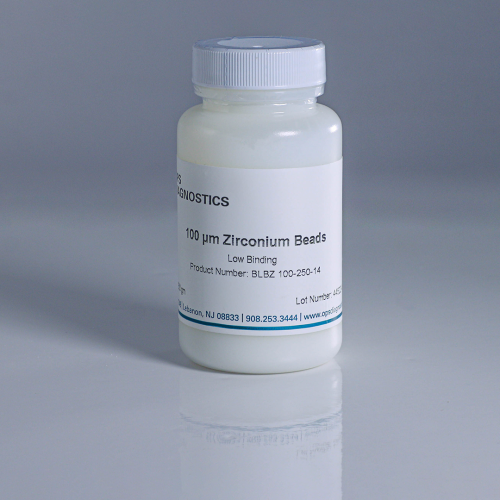
100 µm Low Binding Zirconium Beads, 250 gm
- OPS Diagnostics
- BLBZ 100-250-14
- Na skladě
-
8 200,00Kč
Low binding 100 μm zirconium beads are ideal for disrupting microorganisms, especially bacteria, that are present in low numbers in biological samples. These beads are chemically treated so they bind less solutes liberated from homogenized samples following bead beating. They have been found to be essential for extracting bacterial proteins, particularly from Gram-positive bacteria, resulting in 64% more proteins identified. Other specific applications include protein extraction and digestion of bacteria from mice fecal samples to study human gut microbiome, global mapping of associated proteins of Salmonella cells by mass spectrometry, and RNA extraction of mosquitoes to study feeding behavior, crucial for vector-borne diseases like Zika and dengue. /p>
Both enzyme and PCR-based assays have lower sensitivity when analytes are liberated using untreated beads. Low Binding Beads yield a greater concentration of solutes and provide greater range and linearity, especially in real-time PCR assays.
There are different types of low binding beads available, such as silica (glass) and zirconium, and they come in various sizes to suit different types of samples. Untreated Silica and Zirconium Beads (Zirconium Silicate) have surface chemistries which might bind DNA, RNA, and proteins upon disruption of cells. These beads are chemically altered to eliminate surface charges, which typically bind these molecules upon cell disruption. Low Binding Beads are extremely prone to static electric charges.